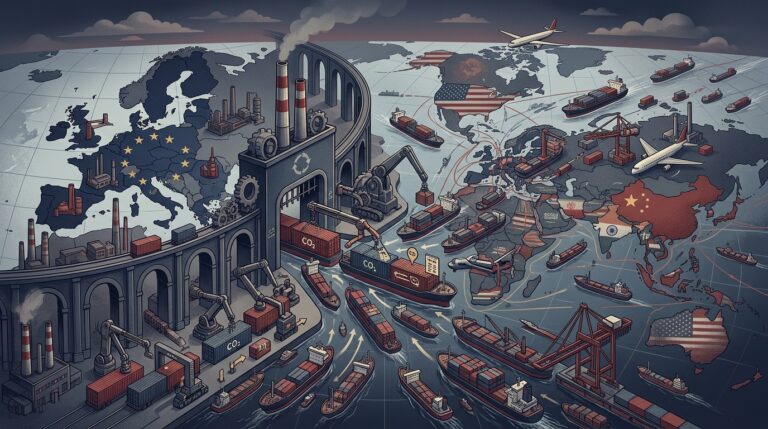
The European Union’s Carbon Border Adjustment Mechanism (CBAM) is no longer a future concern for global manufacturers; its full operational phase, which began January 1, 2026, is creating immediate financial pressure (https://taxation-customs.ec.europa.eu/carbon-border-adjustment-mechanism/cbam-communication-and-news_en). While many observers focus on the first financial payments due in 2027, this overlooks the immediate costs and supply chain divergences emerging from punitive default emissions values and a shortage of accredited data verifiers.
The Hidden Costs of the 2026 CBAM Transition
Starting this year, EU importers of goods covered by CBAM must register and begin detailed accounting for the embedded carbon in their products. The critical shift is how unverified emissions are treated. If a non-EU supplier cannot provide emissions data validated by an EU-accredited verifier, the importer is forced to use a high default value determined by the EU. This system effectively creates a two-tier market. Suppliers with verified, lower-carbon processes can maintain a cost advantage, while those without verification face an immediate, punitive cost markup on their goods, impacting their competitiveness long before any certificates are formally surrendered.
This is compounded by a bottleneck in the availability of accredited verifiers. The demand for these specialized auditors far outstrips the current supply, leaving many small and mid-sized global manufacturers unable to get their data validated in time. This forces their EU customers to provision for higher costs, creating a direct financial incentive to shift sourcing to larger, pre-verified suppliers.
Pricing the Carbon: CBAM Certificate Costs Solidify
The financial impact is now quantifiable. The European Commission has begun publishing the official benchmark price for CBAM certificates, based on the weekly average auction price of EU Emissions Trading System (ETS) allowances. The price for the first quarter of 2026 was set at €75.36 per tonne of CO2, followed by €75.28 per tonne for the second quarter (https://www.indexbox.io/blog/eu-sets-cbam-certificate-price-at-eur7528-per-tonne-for-q2-2026/). These are not theoretical figures; they are the hard numbers that importers must use in their 2026 financial planning and pricing strategies, turning a distant regulatory concept into a present-day line item.
Beyond Raw Materials: CBAM’s Downstream Creep
The scope of CBAM is also a source of immediate risk. The mechanism is already expanding beyond its initial focus on raw materials like steel, aluminum, and cement. The inclusion of downstream manufactured products means that component makers and assemblers are now directly affected. A global supply chain for a product like an automobile or industrial machinery may now have multiple points of CBAM exposure. A single unverified component supplier can create a significant cost liability for the final product importer in the EU, forcing a rapid and complex re-evaluation of entire value chains.
What Remains Uncertain
Several key variables will shape the severity of CBAM’s impact. The pace at which new verifiers can be accredited and deployed globally remains a significant unknown and a primary constraint on compliance. Furthermore, the potential for retaliatory trade measures from major manufacturing economies is a persistent risk, though the timing and nature of any such actions are unclear. Finally, the price of CBAM certificates is directly tied to the volatile EU ETS market, making future cost projections inherently uncertain for corporate planners.
The Watchpoint for Market Observers
The next critical data release for market participants will be the European Commission’s announcement of the official CBAM certificate price for the third quarter of 2026, expected in the first week of October. This figure, along with any reports from industry associations on the use of default values in quarterly declarations, will provide the clearest indication of the regulation’s real-world financial bite.
*This article is for informational purposes only and does not constitute financial, legal, or tax advice. Readers should consult with a licensed professional before making any decisions.*
Want the full institutional-style PDF version? Enter your email for the free PDF.