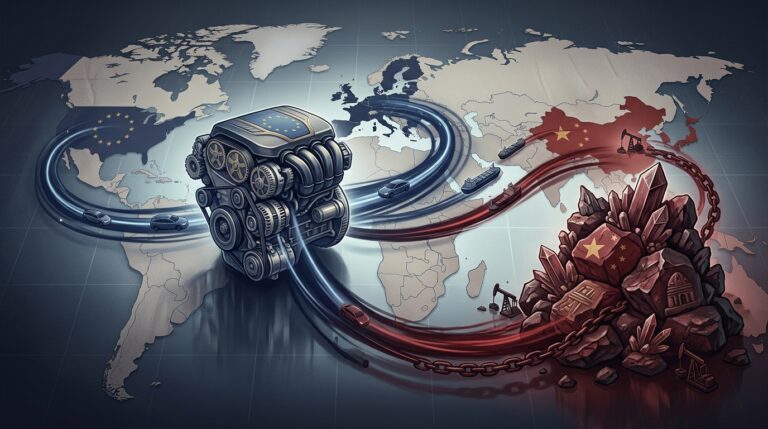
After the October 8-9, 2026 trade consultations in Beijing, the European Union and China described an understanding aimed at easing trade tensions around vehicles and critical inputs. The arrangement centers on Chinese moderation of hybrid vehicle exports to Europe in a WTO-compliant manner, alongside a Chinese commitment to a fast-track mechanism for rare earth and permanent magnet export licenses (European Commission).
The political logic is clear. European automakers want relief from intensifying Chinese competition in plug-in hybrids, while European manufacturers also need dependable access to rare earth permanent magnets. The strategic problem is equally clear: a deal that links downstream vehicle pressure with upstream licensing access may reduce one form of exposure while making another more visible.
Why Hybrids Became the Pressure Point
The backdrop is the EU’s earlier trade defense action against Chinese battery electric vehicles. Under Commission Implementing Regulation (EU) 2024/2754, the EU imposed definitive countervailing duties ranging from 7.8% up to 35.3% on new battery electric vehicles originating in China (EUR-Lex). The same regulation treated plug-in hybrid electric vehicles differently from the battery electric vehicles covered by the anti-subsidy case, leaving hybrids outside that specific duty structure.
That distinction mattered commercially. With battery electric vehicles facing higher duties and plug-in hybrids still subject to the baseline 10% most-favored-nation tariff, Chinese producers had an incentive to emphasize hybrid exports into Europe.
| Vehicle Type | EU Import Tariff Status | Import Volume Trend |
|:— |:— |:— |
| Battery Electric | Up to 35.3% countervailing duty | Constrained by 2024/2754 |
| Plug-in Hybrid | 10% baseline MFN tariff | Rising shipments described in cited reporting |
The Atlantic Council described the broader pattern as part of China’s export surge into Europe, including increased plug-in hybrid shipments (Atlantic Council). In that context, the October understanding can be read as an attempt to manage a tariff gap without immediately escalating into a wider trade fight.
Tactical Relief, Strategic Exposure
For European automakers, the hybrid element offers a tactical benefit. If Chinese export moderation holds, legacy manufacturers gain breathing room to defend margins, adjust model mixes, and compete in electrified vehicles without facing the full force of a rapid import increase.
The rare earth side of the arrangement is more complicated. China’s promise to facilitate export licenses through a fast-track mechanism may reduce immediate uncertainty for European manufacturers, but it also confirms how dependent Europe remains on Chinese administrative decisions for critical inputs.
That dependence is not abstract. The European Union is China’s single largest export destination for rare earth permanent magnets, absorbing 44% of total Chinese exports in that category (Silverado Policy Accelerator). These magnets are essential to electric vehicle powertrains and offshore wind turbines, making licensing reliability a direct industrial concern rather than a narrow customs issue.
The Core Asymmetry
The central risk is not that the agreement provides no benefit. It may. The risk is that Europe receives short-term vehicle market relief while China retains leverage over inputs that European clean technology supply chains cannot easily replace.
A negotiated export moderation framework depends on continued political cooperation. A fast-track license system depends on continued administrative cooperation. If trade tensions worsen, delays or tighter scrutiny in rare earth and permanent magnet licensing could create bottlenecks for European manufacturers even if vehicle import pressure eases.
That asymmetry could narrow Brussels’ room for future trade defense. Any new action against Chinese green technology sectors would have to be weighed against the possibility of slower access to rare earth-related approvals. The result is not formal dependence written into a treaty, but practical dependence embedded in supply-chain timing.
What To Watch
The durability of the arrangement will depend on observable outcomes rather than diplomatic wording.
European customs data for plug-in hybrid imports through Q1 2027 will show whether the reported increase in shipments is actually moderating. Chinese export license issuance for rare earths and permanent magnets will show whether the fast-track mechanism is functioning in practice. Any new EU anti-subsidy action involving Chinese upstream components would test how much policy space Brussels still has after the October 2026 consultations.
The most balanced reading is therefore neither victory nor capitulation. The arrangement may give European automakers temporary protection from hybrid competition, while leaving Europe more visibly exposed to China’s licensing power over rare earth permanent magnets.
*Disclaimer: This article is for informational purposes only and does not constitute financial, legal, or investment advice. This article was researched and drafted with AI assistance. Geopolitical agreements and trade regulations are subject to rapid change. Readers should consult licensed professionals before making investment or supply-chain decisions based on international trade developments.*
Want the full institutional-style PDF version? Enter your email for the free PDF.