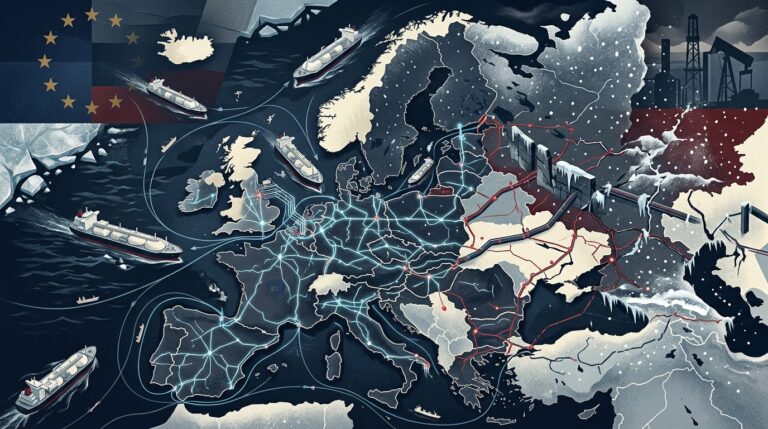
As the 2026-2027 heating season approaches, European energy markets are navigating a structural transformation in natural gas sourcing. While unofficial market commentary frequently highlights anxieties over underground storage volumes, the official regulatory posture presents a different reality—one focused on infrastructure adaptation rather than volumetric panic. The core vulnerability for Europe is no longer just the physical availability of gas, but the pricing and regional exposure risks that accompany heavier reliance on liquefied natural gas (LNG) and alternative routes.
The Reality of Europe’s Winter Preparedness
Despite widespread market anxiety regarding pre-winter storage levels, official assessments indicate that the continent’s grid is equipped to handle the upcoming heating season. On October 8, 2026, the European Commission Gas Coordination Group released its official preparedness baseline, maintaining that the EU gas transmission system is adequately prepared for winter (official source).
Rather than relying solely on static underground storage buffers, the European Commission emphasizes that enhanced infrastructure flexibility provides a robust defense against supply shocks. Specifically, the system’s expanded capacity to absorb LNG and utilize cross-border interconnectors serves as the primary mechanism for balancing winter demand (official source). This official stance suggests that physical rationing is not the baseline expectation, provided the LNG import infrastructure functions as designed.
The End of the Ukrainian Transit Corridor
The shift toward LNG flexibility was necessitated by the permanent alteration of Europe’s eastern pipeline routes. A defining structural change occurred with the January 1, 2025 shutoff of the Ukrainian transit corridor, which abruptly removed 15 billion cubic meters (bcm) of gas from the European market (official source).
This closure fundamentally changed the baseline of European energy security. The loss of this legacy route forced a heavier reliance on alternative import mechanisms and altered the seasonal supply planning dynamics that had historically supported European industry through winter demand cycles.
Trading Pipeline Volume for LNG Flexibility
The European Commission’s emphasis on LNG absorption capacity highlights a fundamental transformation in how the continent secures its winter energy. By replacing fixed-volume, long-term pipeline flows with greater reliance on seaborne LNG, Europe has shifted part of its risk profile from route availability toward the commercial terms and timing of alternative supply.
For energy-intensive industrial sectors, physical security during a normal winter may still be attainable, but the replacement mechanism depends more heavily on LNG availability and the ability of infrastructure to move gas across borders. This dynamic shifts the main policy question from simple physical sufficiency to whether the system can preserve affordability and regional balance during periods of stress.
Unresolved Vulnerabilities in Central Europe
While aggregate EU preparedness appears stable, the macro-level data masks acute regional vulnerabilities. The loss of the Ukrainian transit route disproportionately impacts specific Central European markets that remain physically and contractually tethered to legacy infrastructure.
Currently, the primary remaining eastern pipeline artery is the TurkStream corridor, which delivers approximately 15 bcm of gas to Europe (official source). Lingering long-term contractual and physical exposures remain heavily concentrated in Slovakia, Austria, and Moldova (official source). These nations face a complex balancing act: securing alternative supplies while managing the geopolitical and commercial realities of their remaining pipeline dependencies.
Strategic Watchpoints for Q4 2026 and Q1 2027
Market participants monitoring European industrial margins and energy markets should track several concrete indicators as the heating season progresses:
- TurkStream Flow Stability: Any regulatory or physical disruption to the 15 bcm TurkStream export deliveries would test alternative supply networks and pricing stability in Austria, Slovakia, and Moldova.
- LNG Market Conditions: The availability and cost of marginal LNG cargoes will influence how smoothly Europe can convert infrastructure preparedness into affordable delivered supply.
- European Commission Updates: Further assessments from the Gas Coordination Group regarding the utilization rates of cross-border interconnectors and LNG regasification terminals will provide the most reliable data on system stress.
*Disclaimer: This article is for informational purposes only and does not constitute financial, legal, or investment advice. This article was researched and drafted with AI assistance. Energy markets are highly volatile, and readers should consult licensed professionals before making any investment decisions.*
Want the full institutional-style PDF version? Enter your email for the free PDF.