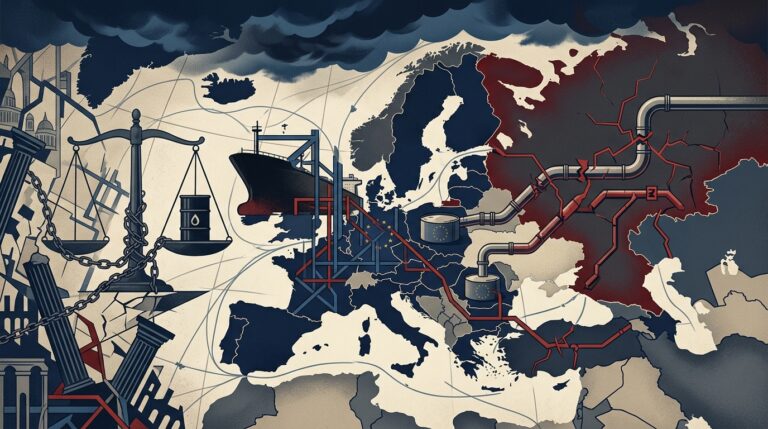
The European Union’s new authority to confiscate and sell Russian oil from shadow fleet tankers marks a significant escalation in its sanctions regime. However, the real-world impact of this policy on Moscow’s energy revenue is likely to be marginal. A combination of international maritime law, complex auction mechanics, and the adaptability of illicit shipping networks creates substantial barriers to effective enforcement, rendering the measure more of a political statement than a decisive economic weapon.
What the EU’s Russian Oil Sanction Allows
As part of its 21st sanctions package, the European Council authorized member states to seize and commercially sell Russian crude oil and petroleum products from tankers violating EU sanctions (https://brusselssignal.eu/2026/07/eu-states-win-power-to-confiscate-and-sell-russian-oil-cargoes/). The regulation allows coastal authorities to conduct public auctions for the confiscated cargo, aiming to deter sanctions evasion and offset the high costs of impounding vessels in European ports (https://militarnyi.com/en/news/eu-to-permit-sale-of-russian-oil-seized-from-shadow-fleet-tankers/). This power is part of a broader effort that also targets maritime service providers, from crewing to fueling, that facilitate the shadow fleet’s operations (https://gcaptain.com/eu-targets-russian-shadow-fleet-banks-and-crypto-in-sweeping-21st-sanctions-package/).
Analysis: The Limits of EU’s Russian Oil Seizure Power
The policy’s primary weakness is its limited geographical reach. EU authority is largely confined to its members’ territorial waters, which extend 12 nautical miles from the coast. Beyond that, in international waters, the United Nations Convention on the Law of the Sea (UNCLOS) protects freedom of navigation. UNCLOS Article 110 strictly limits the right of a state to board a foreign-flagged vessel on the high seas, with exceptions generally reserved for universal crimes like piracy or slave trading, not sanctions enforcement (https://www.brookings.edu/articles/stiffening-european-sanctions-against-the-russian-oil-trade/).
This legal framework means shadow fleet operators can mitigate risk by conducting ship-to-ship transfers and other sensitive operations in international waters, well outside the jurisdiction of EU naval patrols. While this may add marginal costs and logistical complexity, it does not stop the flow of oil.
The Auction Paradox: Who Can Legally Buy Seized Oil?
A second significant hurdle is the auction process itself. Even if a cargo is successfully seized within territorial waters, it is unclear who can legally purchase it. The EU maintains a comprehensive ban on the import of Russian seaborne crude. The new regulation creates a mechanism to sell the oil but does not automatically grant exemptions to EU-based buyers. This could create a legal paradox where the only potential bidders are non-EU entities, depressing auction prices and potentially leading to lengthy legal challenges within the seizing member state’s domestic courts. The resulting revenue may be far less than the market value of the crude, blunting the financial impact on Russia.
What Remains Uncertain
The policy’s effectiveness now hinges on variables that are not yet known. The degree of enforcement will likely differ significantly among member states, depending on their naval capacity, port infrastructure, and political willingness to risk direct confrontation with tankers often flagged in uncooperative jurisdictions. Furthermore, the legal precedents for these auctions have yet to be established, and the first few cases will be critical in determining the viability of the process.
Next Watchpoint for EU’s Russian Oil Sanctions
For market observers, the key indicator of this policy’s impact will be enforcement data, not political announcements. The next watchpoint is the end of Q4 2026. Member states have until September 30, 2026, to transpose the regulation into national law. Therefore, the first concrete test will be any seizure and auction attempts reported by key maritime states like Greece, Spain, or Malta in the following quarter. The outcome of the first attempted auction will reveal the true legal and commercial viability of the EU’s new power.
*(Disclaimer: This article is for informational purposes only and does not constitute financial, legal, or tax advice. Readers should consult with a licensed professional before making any decisions.)*
Want the full institutional-style PDF version? Enter your email for the free PDF.