Global energy markets are currently grappling with a structural disconnect. While headline crude oil futures fluctuate based on geopolitical sentiment, the actual cost of delivered crude—and consequently, retail refined products—remains stubbornly elevated. Mainstream analysis frequently attributes this downstream inflation to upstream wellhead supply risks or aggregate production quotas. However, the physical flow of oil tells a different story. The primary driver of elevated fuel prices is no longer a shortage of crude at the origin, but rather a massive, unhedgeable spike in the maritime logistics required to move it.
The Disconnect Between Wellhead Supply and Landed Cost
Market participants tracking paper benchmarks like Brent or WTI often expect retail gasoline and diesel prices to mirror the futures market. When futures stabilize, retail prices are theoretically expected to follow. Yet, this correlation breaks down when the physical delivery mechanism is under severe stress.
The current market environment has converted a perceived volume crisis into a localized freight and insurance cost multiplier. While the underlying commodity might be available at the wellhead, the cost to physically land that barrel at an import terminal has decoupled from historical norms. This dislocation means that refiners are paying a steep premium that cannot be hedged through standard financial derivatives, forcing them to pass the logistical inflation down to the retail level.
Re-Engineering the Middle East Export Architecture
To understand the pricing disconnect, observers must look at how Middle Eastern crude is currently reaching the global market. Despite regional tensions, export volumes have largely recovered from recent disruptions. According to vessel tracking analysis, Middle East crude exports recovered to 16.0 to 16.5 million barrels per day in September 2026 (Kpler).
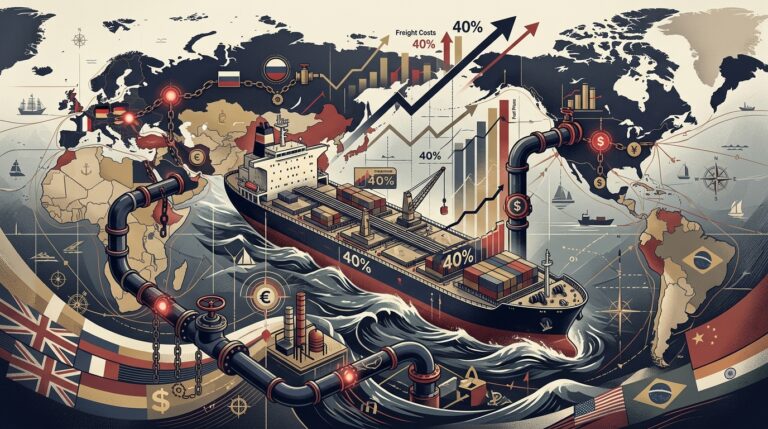
This recovery was not achieved by returning to business-as-usual transit through traditional maritime chokepoints. Instead, the regional export architecture has been fundamentally re-engineered to prioritize security over efficiency. Overland pipeline bypasses, specifically the Petroline and ADCOP systems, now account for 40% of outflows, a stark increase compared to their 17% historical share (Kpler).
This shift toward overland routes is operating alongside widespread ship-to-ship lightering outside the Strait of Hormuz. Rather than a single vessel loading at the origin and sailing directly to the destination, the supply chain now relies on a complex, multi-stage delivery network utilizing shuttle tankers and offshore transfers to bypass high-risk zones.
The Unhedgeable Freight Cost Multiplier
While this re-engineered transit architecture successfully maintains physical volume, it has shifted the economic strain entirely onto freight and logistics. The cost to charter vessels and execute these complex bypass maneuvers has surged, creating a landed cost penalty that fundamentally alters the economics of crude procurement.
Recent shipping data illustrates the severity of this logistical inflation. Freight costs are now exceeding 40% of the total delivered crude value, a dramatic escalation from the 7% average observed in 2025 (KFGO).
The absolute dollar figures for securing tonnage highlight the immense strain on physical buyers. Individual long-haul charter fixtures have surged from $9.1 million to $81 million, effectively adding $40.50 per barrel in pure transit costs (KFGO). When a single voyage costs $81 million, the traditional pricing models used by refiners to calculate their margins are rendered obsolete.
Downstream Implications for Refiners and Retail Markets
This logistical friction explains why retail gasoline and diesel prices remain elevated regardless of daily movements in paper futures. Standard derivative contracts hedge the underlying commodity price, but they do not protect refiners from localized, physical freight premiums or the costs associated with multi-stage ship-to-ship transfers.
When transportation costs consume over 40% of the delivered value of a cargo, refiners face immediate and severe margin compression. To maintain operational viability, these unhedgeable landed costs must be passed downstream to wholesale and retail fuel markets. The market is effectively pricing in a logistics crisis rather than a supply deficit. Until the cost of moving the physical barrel normalizes, the disconnect between paper crude prices and retail fuel costs is likely to persist.
Key Logistics and Freight Watchpoints
For market observers attempting to gauge when downstream fuel inflation might ease, the focus must shift from wellhead production quotas to maritime logistics data. Key indicators include:
- Long-Haul Charter Fixtures: Monitor upcoming LSEG shipping data to see if the $81 million peak for long-haul fixtures normalizes or establishes a new, elevated baseline for the remainder of the quarter.
- Pipeline Utilization Rates: Watch Kpler export tracking to determine if the 40% overland bypass ratio holds steady. Any infrastructure constraints on Petroline or ADCOP could force more volume back onto traditional, higher-risk maritime routes, further straining available tanker tonnage.
- Refiner Margin Commentary: In upcoming quarterly earnings calls, pay close attention to how independent refiners discuss their landed crude costs versus their paper benchmark hedges, as this will indicate how much logistical inflation is still being absorbed versus passed to consumers.
Disclaimer: This article is for informational purposes only and does not constitute financial, investment, or legal advice. This article was researched and drafted with AI assistance. Market conditions and freight rates are highly volatile. Readers should consult with licensed professionals before making any trading or investment decisions based on commodity pricing or logistics data.
Want the full institutional-style PDF version? Enter your email for the free PDF.