Forces That Will Redefine Cross‑Border Commerce
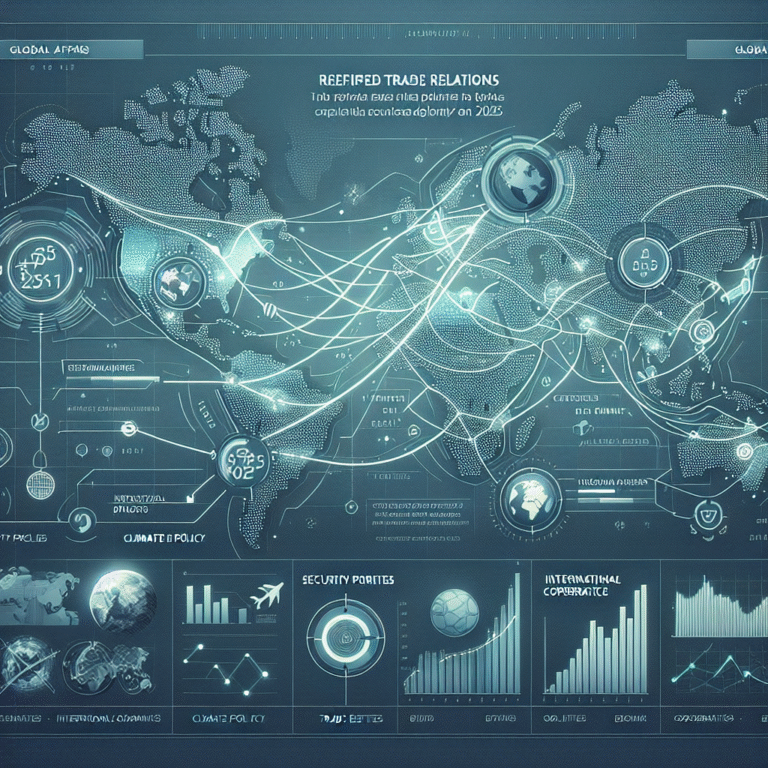
Trade is entering a new cycle shaped by security priorities, climate policy, and shifting political mandates. Companies are asking how global affairs 2025 will influence sourcing, pricing, and market access. The answer lies in a few powerful vectors that will drive trade relations impact throughout the year.
First, election cycles and cabinet reshuffles across major economies can slow or accelerate talks on tariffs, standards, and data flows. Second, governments are deepening industrial strategies around chips, clean energy, and critical minerals. Third, climate-linked measures are moving from reporting to real costs at the border, changing comparative advantage.
Election Mandates And Policy Volatility
Leadership changes in Europe and ongoing legislative dynamics in the United States will shape regulatory timelines and enforcement intensity. India’s continuity after its 2025 vote provides policy stability that investors value, while Taiwan’s 2025 election outcome keeps cross-strait trade on watch. Businesses should expect more consultations and impact assessments before large tariff changes, but also tighter scrutiny of subsidies and security-sensitive sectors.
De‑Risking, Not Full Decoupling
Washington’s 2025 tariff adjustments on select Chinese goods and expanded export controls on advanced chips and tools will echo into 2025 contracts. The European Union is pursuing trade remedies on electric vehicles and green tech inputs. Rather than a clean break, value chains are rebalancing toward Mexico, Vietnam, India, and parts of Eastern Europe and North Africa. This friend‑shoring pattern is one of the clearest political shifts 2025 will reinforce.
Climate Policy At The Border
The EU’s Carbon Border Adjustment Mechanism is transitioning from reporting to payments over its phased schedule, pressuring producers to disclose and reduce embedded emissions. More economies are exploring carbon‑aware procurement and standards. Even absent a federal carbon price in the U.S., suppliers selling into Europe must prepare for documentation, verification, and potential pass‑through costs.
Security, Sanctions, And Sea Lanes
Sanctions related to Russia’s war in Ukraine continue to expand in scope and enforcement. Red Sea disruptions and prior Panama Canal capacity constraints underscored how chokepoints swing freight rates and delivery times. Insurers and carriers are pricing routes more dynamically, keeping logistics costs volatile into 2025.
Implications For Growth And Prices
For economies in 2025, nearshoring may lift investment in Mexico and Central Europe, while higher compliance costs weigh on energy‑intensive exporters. Semiconductor equipment, critical minerals, EV components, and renewable inputs remain policy hot zones. Net effect: slightly longer lead times, more documentation, and a two‑track globalization where trusted corridors deepen.
Where Opportunity Is Emerging
Winners include firms that can certify low‑carbon output, navigate rules of origin, and localize final assembly near end markets. Logistics providers with flexible capacity, and financial services that hedge currency and freight risks, also stand to gain.
Room For International Cooperation
Expect renewed attention to World Trade Organization reform, plurilateral deals on services and investment, and data‑flow frameworks that balance privacy with innovation. Progress here would blunt fragmentation and support international cooperation even as security screening tightens.
Action Steps For U.S. Leaders
- Map tier‑2 and tier‑3 suppliers; add a second source in FTA or treaty‑aligned markets.
- Use USMCA, KORUS, and CAFTA‑DR preferences; revisit rules of origin to optimize duty exposure.
- Model EU CBAM pass‑throughs; start product‑level emissions data collection and verification.
- Scenario‑plan for 5–15 percent tariff swings on sensitive goods; explore tariff engineering.
- Tighten sanctions screening and end‑use controls; update contracts for re‑routing and surcharges.
- Leverage CHIPS and clean‑energy incentives while aligning with prevailing wage and content rules.
- Hedge freight and FX; build trigger points to shift modes or ports when thresholds are hit.
Quarterly Indicators To Watch
- Container and bulk freight indexes, port dwell times, and insurance premia.
- Tariff and trade‑remedy announcements in the U.S., EU, and China.
- WTO dispute activity and e‑commerce moratorium deliberations.
- Export orders in PMI surveys across G7 and key emerging markets.
- Energy prices and critical mineral benchmarks.
- Climate‑policy rollouts, including reporting deadlines and border measures.
Bottom Line
Trade in 2025 will be defined by steady de‑risking, climate costs at the border, and targeted security controls. To navigate these political shifts 2025 without sacrificing growth, firms should tighten compliance, diversify suppliers, and invest in credible emissions data. The result is a more resilient footprint that turns uncertainty into advantage across global affairs 2025, trade relations impact, international cooperation, and economies in 2025.