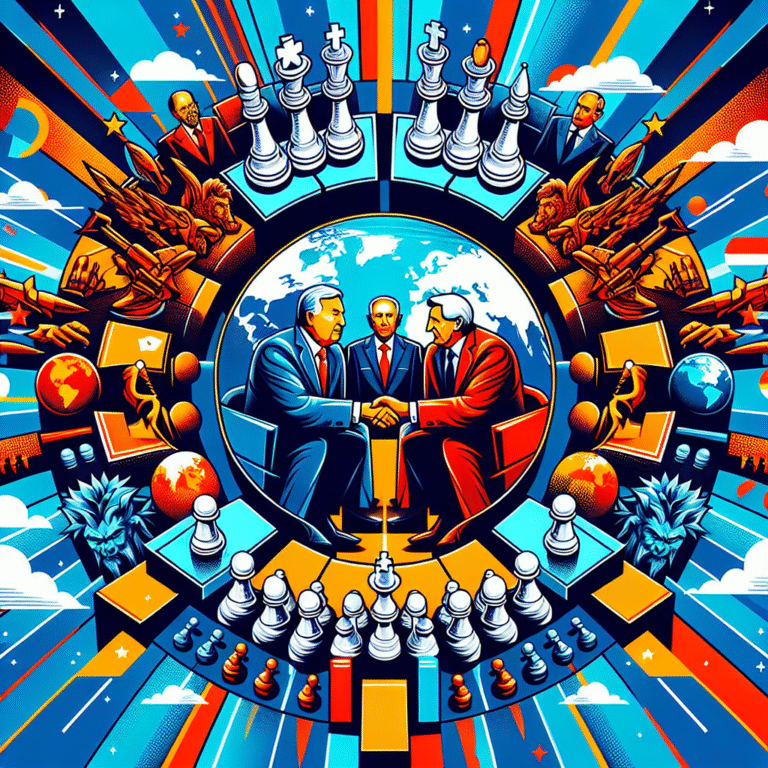
Global affairs are shifting from efficiency-first globalization to security-centric competition. Unlike the U.S.–Soviet standoff, today’s rivalry is fought through supply chains, standards, sanctions, semiconductors, and data. As blocs harden and middle powers hedge, investors must treat geopolitics as a core portfolio risk—mapped, priced, and managed.
Alliances are being redrawn
Washington is reinforcing U.S.-aligned networks—from NATO’s broader remit to Indo-Pacific groupings like the Quad and AUKUS. Beijing anchors Asia’s trade architecture: the Regional Comprehensive Economic Partnership (RCEP) entered into force in 2022 and covers roughly 30% of global GDP and population. BRICS expanded in 2024 to include Saudi Arabia, the UAE, Egypt, Ethiopia, and Iran, signaling a push for greater influence even as economic integration remains uneven. Europe pursues “strategic autonomy,” tightening investment screening while balancing its U.S. security ties with economic exposure to China. Middle powers—India, Vietnam, Türkiye, Brazil, and Gulf states—are “multi‑aligning,” trading widely and leveraging geography.
Trade, tech, and standards: security over efficiency
Friend‑shoring and nearshoring are moving production toward Mexico, Central/Eastern Europe, India, and ASEAN. The U.S. tightened advanced‑chip export controls in October 2022 and again in October 2023, while allies such as the Netherlands and Japan restricted critical lithography tools. Industrial policy has returned: the U.S. CHIPS and Science Act allocates $52.7 billion to semiconductors, and the Inflation Reduction Act directs roughly $369 billion to climate and energy incentives. China has countered with export controls on inputs like gallium and germanium. Competing rules on data localization, AI governance, and cybersecurity are fragmenting digital markets and raising compliance costs.
Energy and critical materials
Europe has replaced much Russian pipeline gas with LNG via new regasification capacity and long‑term contracts. Red Sea disruptions since late 2023 have forced vessels to detour around the Cape of Good Hope, often adding 10–14 days of transit and higher insurance costs. OPEC+ supply management keeps a geopolitical premium in oil. Transition metals—copper, nickel, lithium, cobalt, and rare earths—face supply concentration and policy risk, boosting the value of recycling, alternative processing hubs, and long‑dated offtake contracts.
Finance and payments: de‑risking the dollar system
Sanctions and SWIFT restrictions have increased compliance burdens and spurred marginal growth in alternative rails (CIPS, SPFS) and local‑currency settlement for select commodities. Reserve diversification is gradual; the dollar remains dominant. The EU’s Carbon Border Adjustment Mechanism began its transitional reporting phase on October 1, 2023, with levies slated to start in 2026—important for carbon‑intensive exporters.
Market implications
Winners include defense, aerospace, and cybersecurity (multi‑year procurement visibility); energy security plays (LNG, midstream, grids, nuclear services); critical minerals and processing; and industrial automation, robotics, and logistics. Select beneficiaries of friend‑shoring: Mexico, India, Vietnam/ASEAN, and the GCC. Vulnerabilities include firms with concentrated country exposure, energy‑intensive industries facing high input and carbon costs, and consumer tech dependent on cross‑border data flows.
Scenarios and signals to watch
Baseline fragmentation implies persistent but manageable frictions, moderate inflation stickiness, and a rerating of strategic sectors. An escalation shock (e.g., a major cyber or maritime disruption) would likely hit risk assets while boosting energy and gold. A détente‑lite path could lower volatility without reversing security‑driven economics. Track export‑control updates, shipping rates via Suez/Cape routes, foundry capex and lead times, LNG contract volumes, and defense budgets—NATO expects 23 allies to meet the 2%‑of‑GDP target in 2024.
Investor playbook
- Map revenue, asset, and supplier exposure by jurisdiction; identify Tier‑2/Tier‑3 choke points.
- Build redundancy: dual‑source critical parts, hold strategic inventory, diversify ports and carriers.
- Strengthen risk transfer with political risk, trade credit, marine, and cyber coverage.
- Tilt toward resilient balance sheets and mission‑critical products; demand governance disclosures on geopolitical risk.
- Hedge tail risks with options; consider commodity overlays (energy, copper); use natural FX hedges.
- Favor economies with friend‑shoring inflows and policy credibility; avoid rising sanction or capital‑control risk.
Bottom line: Security is now a binding economic constraint. Align portfolios with long‑cycle themes—defense and cybersecurity, energy security and grids, electrification, and critical materials—and prize resilience and optionality.
Disclaimer: This article is for informational purposes only and does not constitute investment advice.